Requirements for electrical installations in Ex zones
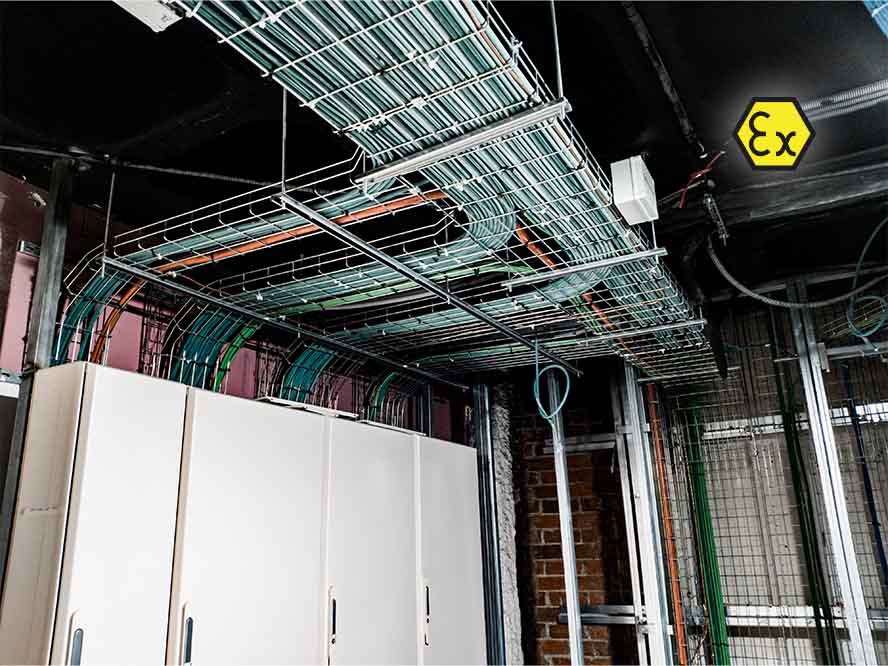

This article discusses requirements for companies and installers when designing and installing electrical systems in hazardous areas.
Classification of explosion risk zones
Before starting any electrical installation work in hazardous areas, it is necessary to carry out a zone classification. This process is indispensable to ensure safety and the optimal selection of equipment. Zone classification determines the degree of danger that can be encountered in the area, which in practice translates into the separation of zones with different levels of risk:
- Zone 2 – a space where the hazard is minimal and the gaseous explosive mixture may only occur for a short time, e.g. as a result of an accident.
- Zone 1 – where a gaseous explosive mixture is likely to occur during normal operation,
- Zone 0 – an area where a gaseous explosive mixture may be present continuously, for long periods or frequently,
For dust mixtures, similar classifications apply, labelled as zones 20, 21 and 22. Using these classifications, engineers can select equipment accordingly, confident that it will be safe in a given environment.
Use of certified equipment
A key requirement is that only equipment certified to ATEX Directive 114 is used. Certification ensures that each piece of equipment has passed the appropriate tests and meets the requirements for safety under potential explosion conditions. Certified electrical equipment is designed not to be a source of ignition, even in the event of failure. The exception to this is cables and wires. For these, the law does not impose a certification requirement. However, this does not absolve the obligation to select them appropriately for the working conditions. Wondering whether all Ex equipment must be ATEX-certified? – Read the next article.

Design, selection and installation in accordance with the standard
Any electrical installation in explosive atmospheres must comply with EN 60079-14 Explosive atmospheres. Part 14, Design, selection and installation of electrical installations. This standard describes in detail the requirements for the design, installation and operation of electrical installations and equipment in such areas. In addition, the standard takes into account space-specific hazards and requires the use of explosion-proof equipment with the appropriate level of protection according to the space classification.
Minimising electrical installations in hazardous areas
Any electrical equipment installed in a hazardous area is a potential source of ignition. Even if each piece of equipment meets safety standards and is properly protected and certified, its very operation in the zone increases the potential risk of explosion.
It is therefore extremely important to reduce the number of electrical installations to an absolute minimum. The aim should be to minimise not only the number of appliances, but also the number of wires and electrical connectors in the hazardous areas. Reducing the number of components in a zone therefore reduces the likelihood of failure.
Design optimisation
Right from the design stage of an electrical installation in hazardous areas, it is crucial to think about which equipment and components are necessary. Designers must aim to create the simplest possible systems that fulfil their purpose with as few components as possible. In practice, this means, for example, minimising the length of cable runs and centralising control and distribution functions outside the hazardous areas.
Reducing maintenance costs
Fewer electrical installations and equipment in hazardous areas also mean lower maintenance costs. Any equipment in such spaces requires regular maintenance, condition checks and possible repairs. In order to perform these, it is always necessary to remove the explosive atmosphere, which usually entails stopping production. Reducing the number of installations and equipment means there are fewer components that need to be monitored, which reduces both operating costs and the risk of failure during operation.


Moving equipment out of hazardous areas
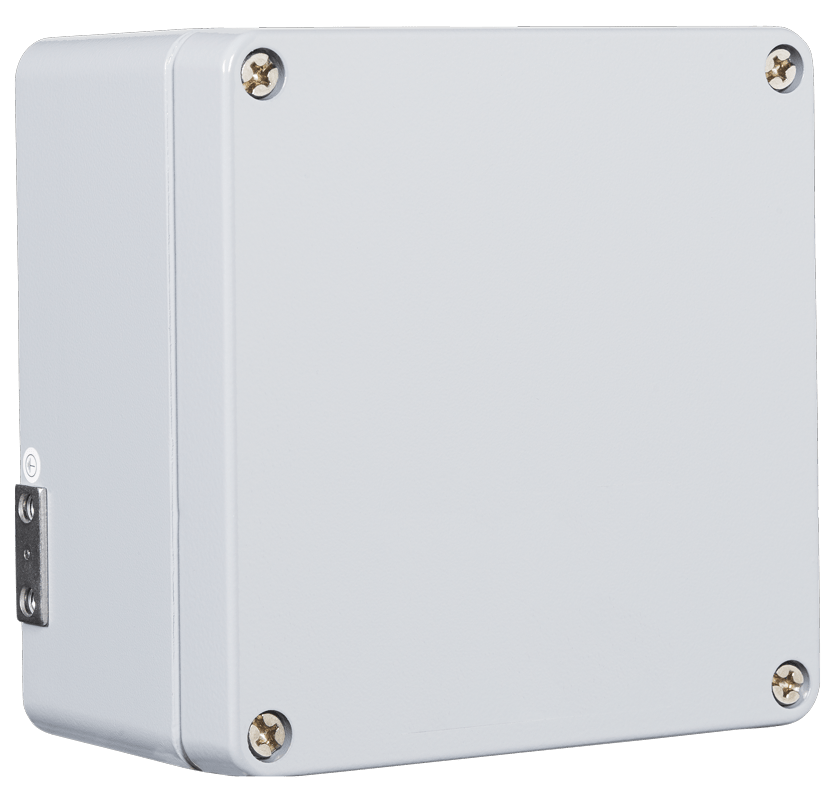
One of the fundamental principles of the design of electrical installations in potentially explosive atmospheres is to relocate electrical systems and equipment, as far as possible, out of the hazardous areas. This applies in particular to switchgear systems, control systems and other control apparatus. The aim of this approach is to reduce the risk of failure by minimising the number of equipment operating in the immediate vicinity of potential explosion sources. In some industries, such as petrochemicals and chemicals, there are so many Ex Zones that it is difficult to relocate much electrical equipment out of hazardous areas, however, it is worth considering below some of the benefits that relocating equipment provides whenever possible.
Relocation of control and distribution systems
Control systems, switchgear and other equipment that does not need to operate directly in hazardous areas should be relocated outside these areas. This will ensure that these devices operate under safe conditions, while at the same time less restrictive requirements can be applied to their design. For example, relocating switchgear outside the hazardous area allows the use of standard equipment that does not have to comply with ATEX requirements, which reduces installation and operating costs.
Importantly, if any electrical equipment can be relocated outside the hazardous area, the same benefits, in terms of reduced operating costs and reduced ignition risk, will be achieved as if new installations were designed with the minimum number of required equipment operating in the area.
Use of central control systems
In the design of electrical installations in potentially explosive atmospheres, the relocation of equipment outside the ex zones is often combined with the use of central control and monitoring systems. With modern SCADA (Supervisory Control and Data Acquisition) systems, it is possible to control the operation of equipment in hazardous areas from a central location outside these zones. Such solutions not only increase safety, but also enable more precise monitoring of equipment operating parameters, allowing early detection of potential failures and minimising their consequences.
Installation of electrical installations in hazardous areas in accordance with the documentation
The installation of electrical installations in potentially explosive atmospheres must be carried out with the utmost care, in accordance with the design documentation, the technical and operating documents (DTR) and the instructions of the manufacturers of the electrical equipment. Each stage of the installation must be inspected to ensure compliance with accepted safety and quality standards.
Compliance with technical documentation
Technical documentation forms the basis of any electrical installation project in hazardous areas. Detailed documentation is required which provides precise guidance on:
- Selection of equipment in accordance with zone classification,
- Technical parameters of combustible substances present in the space,
- Guidelines for assembly, installation and operation of equipment.
The documentation should take into account both safety standards and equipment manufacturers’ requirements, ensuring that all components of the installation meet the stringent standards for operation in hazardous areas.
Each component of the installation must be installed in accordance with the installation plan shown in the technical documentation. Non-compliance of the installation with the blueprint can lead to serious errors which may jeopardise the safe operation of the installation. It is therefore essential that those responsible for installation carefully study the diagrams and instructions before starting work.
Read more about cables for use in hazardous areas.

Verification of the technical condition of equipment
Before installation, it is necessary to check the technical condition of the electrical equipment. All equipment must be carefully checked for compliance with certificates and manufacturers’ instructions. Appliances that show any mechanical or electrical damage must not be used and should be withdrawn from installation.
Manufacturer’s installation instructions
Each device has its own specific installation requirements, which are outlined by the manufacturer in the installation instructions. These guidelines must be strictly adhered to. These include proper mounting, protection against external influences and how to connect to the electrical system. The installation of explosion-proof equipment requires the use of suitable materials and techniques to ensure tightness and prevent the formation of sparks or electrical arcs.
Wire connections and cable entry
Electrical installations in explosive atmospheres must be carried out in a way that prevents sparks from entering the explosive atmosphere. Therefore, an important part of the installation is the correct connection of cables and the insertion of cables into equipment. All connections must be made tightly and cable entry points must be adequately protected against moisture and dust.


Testing and acceptance of electrical installations in explosion hazardous areas
Upon completion of the installation, every electrical installation in hazardous areas must be subjected to acceptance tests. These tests include checking the correctness of the installation, compliance with the documentation, as well as the functionality of the safety systems. All tests must be documented and the results should confirm that the installation meets the safety requirements and is ready for operation.
Checking compliance with certificates
Every component of the installation must comply with ATEX or other safety certificates in force in the region. These certificates must be checked prior to installation and, after installation, it must be ensured that the installation operates in accordance with the requirements of the certificates.
Staff qualifications
Electrical installations in hazardous areas must only be carried out by qualified personnel. Employees must have the necessary qualifications, confirmed by examinations, to ensure that all work is carried out in accordance with the applicable standards. Only competent people are able to carry out installations and maintenance correctly, which has a direct impact on safety.
Decommissioning of defective equipment
Defective equipment must not be used in hazardous areas. Any damage, even the smallest, can lead to dangerous situations, which is why any defective equipment must be immediately withdrawn and replaced with new equipment that meets all requirements.
Protection against external influences
The last of the key aspects of the design and operation of electrical installations in potentially explosive atmospheres is protection against external influences. Equipment, cables, and other plant components must be adequately protected from a variety of environmental factors that could affect their reliability and operational safety. In potentially explosive atmospheres, factors such as moisture, temperature, vibration, chemicals or mechanical radiation can not only weaken the structure of the installation, but also increase the risk of explosion. It is important to remember that in many industries, such as chemicals and petrochemicals, a harsh working environment cannot be eliminated, which is why it is so important to adequately protect plant and equipment from these factors.
Protection from external influences covers various technical and environmental aspects, as detailed below:
Protection against environmental factors
Electrical equipment, cables and wires installed in hazardous areas must be adequately protected from the external environment. Typical environmental hazards are:
- Thermal factors – Too high a temperature can cause equipment to overheat, leading to failure or creating potential sources of ignition. Conversely, too low a temperature can affect the brittleness of plant materials and components. It is therefore important to use materials that can withstand varying temperature conditions and to put in place measures to protect equipment from overheating (e.g. ventilation, cooling) or freezing (e.g. heating).
- Chemical substances – In industrial areas where corrosive substances or other aggressive chemicals may be present, it is necessary to use corrosion-resistant materials and to adequately protect the equipment from exposure to these substances. Enclosures of explosion-proof equipment should be made of chemical-resistant materials, and protective coatings are additionally recommended.
- Moisture – Moisture can penetrate electrical installations, leading to short circuits, cable corrosion and equipment failure. Therefore, all cable connections must be airtight and equipment must have the appropriate IP (Ingress Protection) rating to resist water penetration. Additional seals and hermetic protection are used in areas particularly exposed to moisture.
- Vibration and shock – Electrical installations in industrial areas can be subjected to vibration resulting from the operation of machinery and equipment. Unprotected components can become mechanically damaged or loose, creating the risk of sparks and consequently explosions. To prevent this, special fixings, shock absorbers and additional mechanical reinforcements should be used to ensure the stability of the installation.
Spark prevention
The prevention of sparks in electrical installations in hazardous areas is one of the key objectives in the design and operation of such installations. Sources of sparking can range from electrostatic discharge to arcing to mechanical sparks resulting from damage or vibration.
- Insulation of wires – All wires and cables must be properly insulated and connections must be made with suitable covers. It is also important to avoid loose connections that can lead to arcing.
- Isolation of live parts – Live parts of equipment must be isolated from the environment to prevent accidental contact or damage that could lead to a spark. The use of additional shielding and ensuring that explosion-proof equipment is sealed are key elements in minimising the risk of sparks.
Connection to the equipotential busbar
All accessible structures and enclosures made of conductive materials must be connected to an equipotential bus. The purpose of this is to equalise electrical potentials, thus preventing electrostatic discharges which can lead to sparks and consequent explosions. Equipotentialisation is one of the basic methods of protection against electric shock and prevents the formation of a potential difference between the conductive parts of the installation.
The equipotential bus must be well earthed and all connections must be made in accordance with the standards to ensure full protection. Regular checks on the condition of the equipotential connections are key to ensuring their effectiveness throughout the life of the installation.