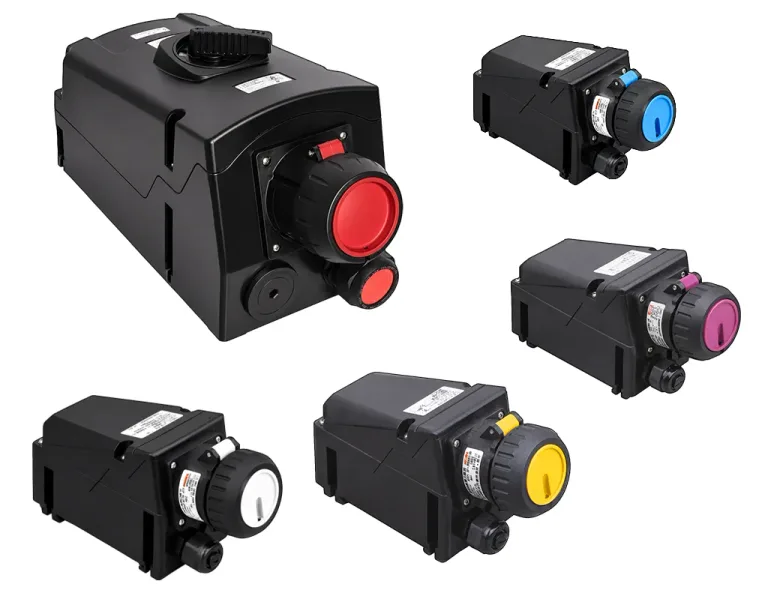

ATEX explosion-proof sockets: 16A | 32A | 63A | 125A
ATEX marking
 II 2 G Ex db eb IIC T6….T4 Gb
II 2 D Ex tb IIIC T80°C Db
Technical specifications
Downloads

A comparison with brands from Germany, Italy and Croatia revealed an average price difference of 30 per cent, with no apparent difference in build quality.

We top up our stock on an ongoing basis to ensure that the most popular variants are available immediately.
We design and manufacture socket sets and distribution boards for Ex zones, tailored to the requirements of the installation.

Are our products of high quality? Book a visit to our demo centre and compare them with solutions from other companies.
CHECK PRICES / BECOME A DISTRIBUTOR
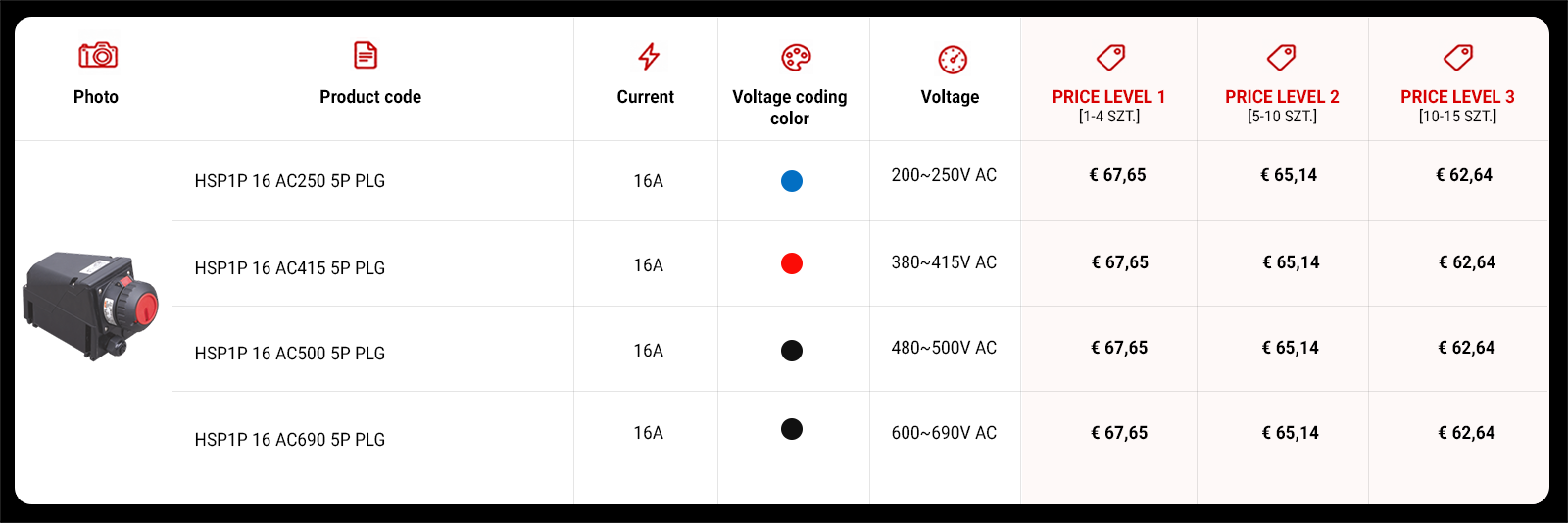
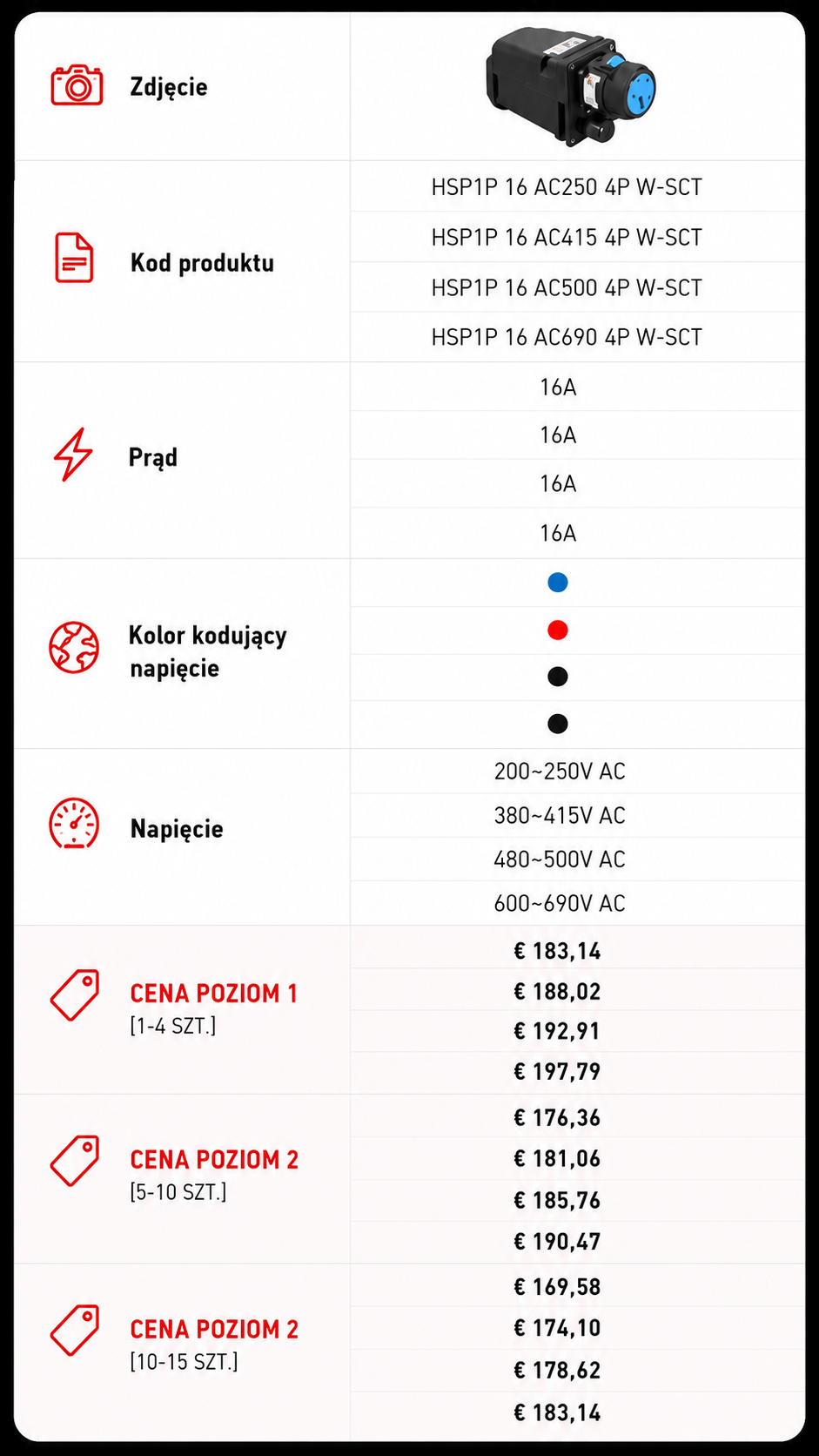
Price list for Ex sockets and plugs
Design of
HARDO HSP1P explosion-proof sockets

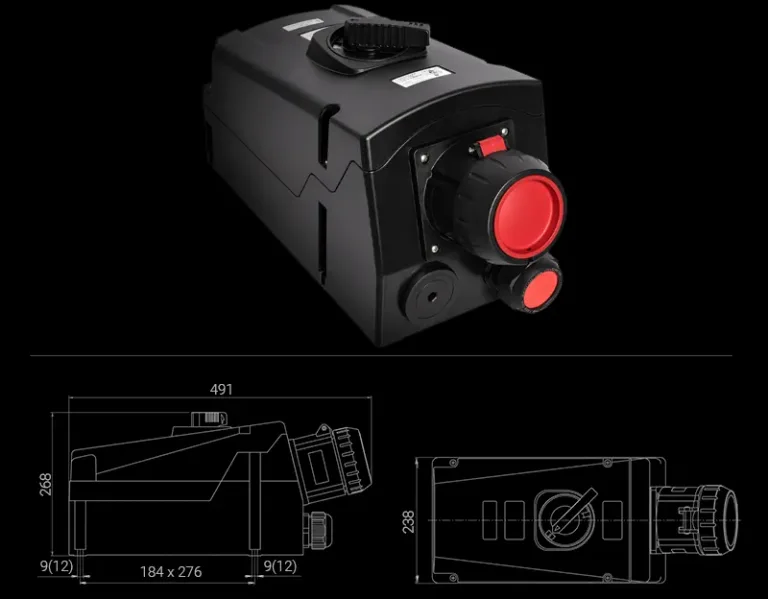
Robust GRP housing: glass fibre-reinforced resin ensures resistance to impact, corrosion and harsh industrial conditions.
Antistatic properties: special additives in the housing material reduce the risk of electrostatic discharge.
Impact- and abrasion-resistant socket inlet: the combination of polyamide 66 and polycarbonate ensures high durability during plug insertion and removal.
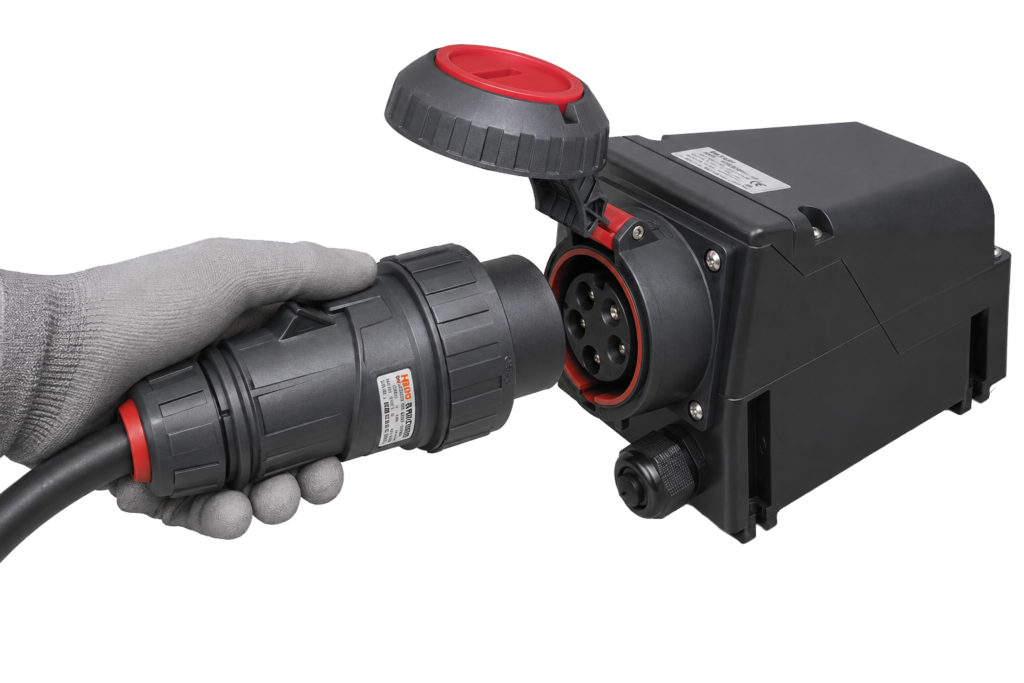
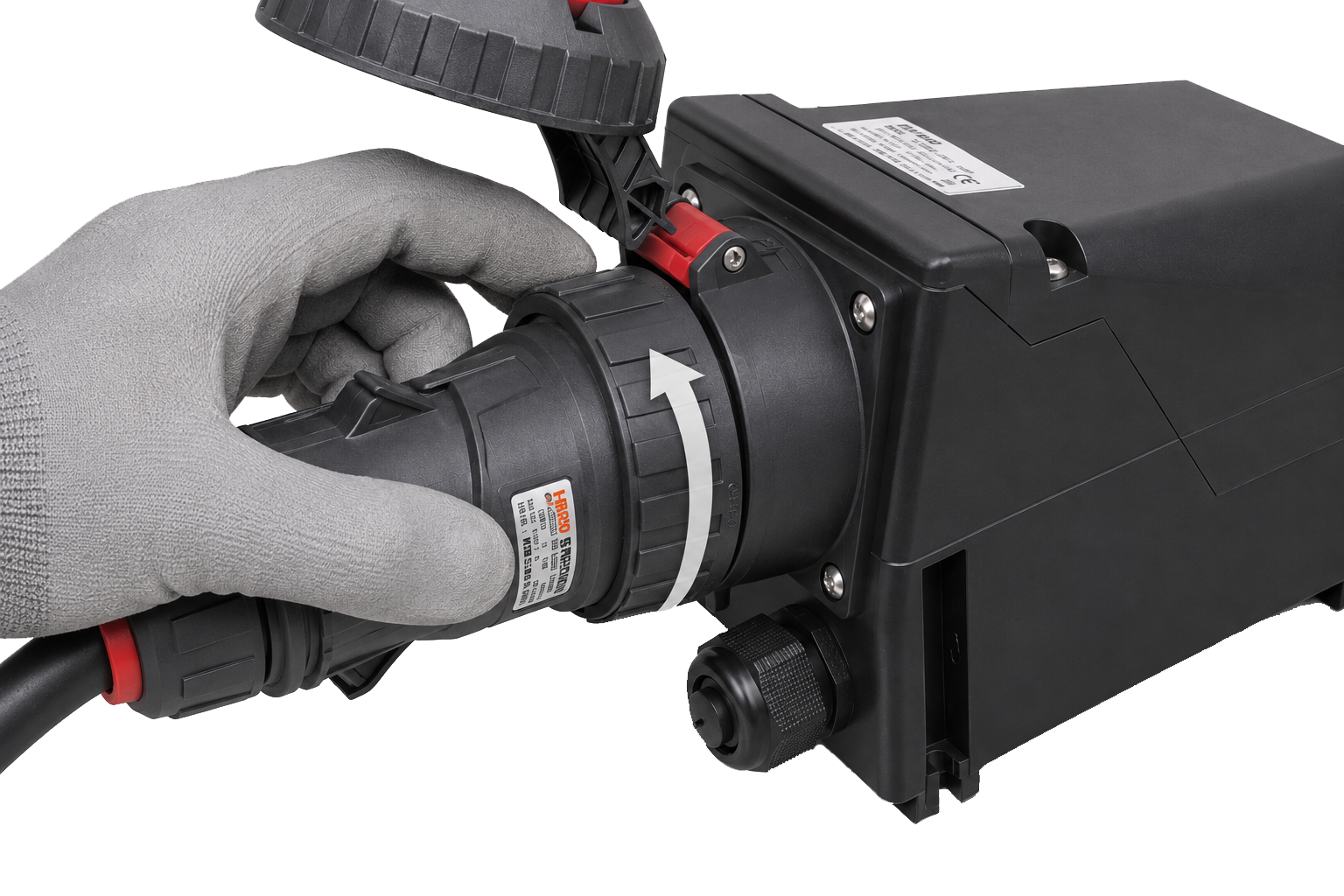
Circuit breaker with disengagement lock: inserting the plug does not allow current to flow. The circuit is only closed once the socket is switched on: in the 16 A and 32 A models by turning the plug, and in the 63 A and 125 A models by turning the knob on the housing. During operation, the plug is locked in the socket and can only be removed once the power has been switched off. This reduces the risk of a dangerous electric arc.
Self-cleaning contacts: spring-loaded contact sleeves clean the plug pins, ensuring low contact resistance and minimising temperature rise. They also make it easier to insert and remove the plug.
Padlockable cover: protects the socket from contamination and unauthorised use.
Socket sets for Ex zones
Set of repair sockets for Ex zones
This solution enables the connection of standard plugs from non-Ex equipment, such as drills, grinders and industrial vacuum cleaners. This is particularly important during renovation work, when the tools used often lack ATEX certification and their plugs do not fit into certified Ex sockets.
The kit includes an ATEX-certified switch with a lockout mechanism for up to three padlocks, and a module with safety features and industrial sockets, housed in an ATEX-certified anti-static GRP enclosure.
During normal operation, the switch isolates the power supply from non-Ex parts. Operation is only possible after authorisation has been granted and the physical lock has been removed.
Ex socket set
A solution with a similar purpose, but manufactured entirely in the Ex version. This means the set can be used during normal operation of the installation, including in Ex zones, and can power ATEX/IECEx-certified equipment – their plugs are compatible with the Ex sockets used.
The set can be configured according to the application’s requirements, e.g. with or without a main switch.

Skrzynki łączeniowe
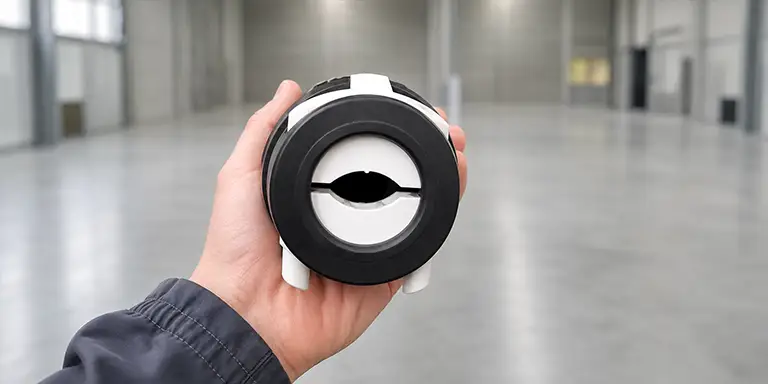
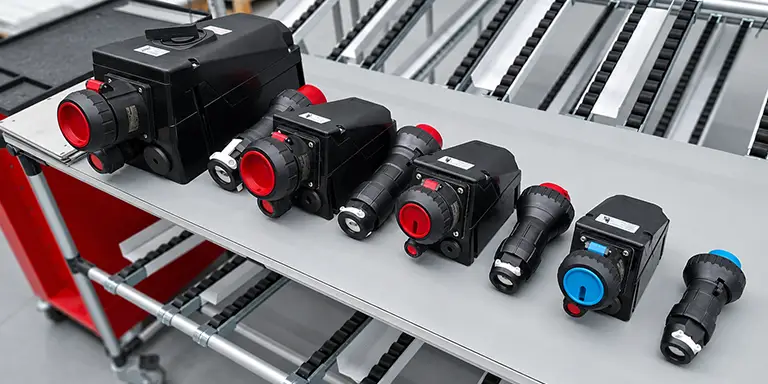
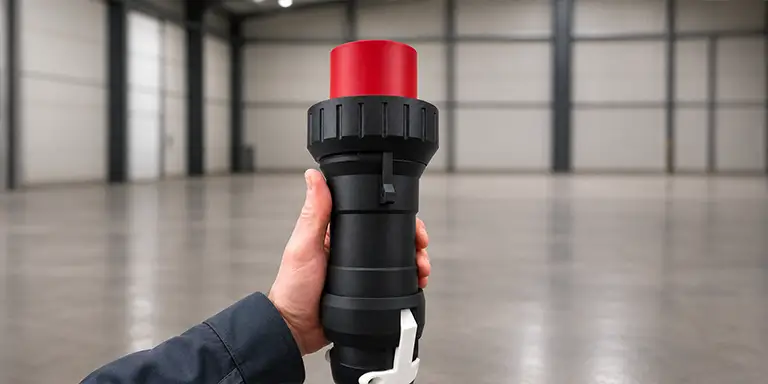
Ex-rated wall-mounted sockets for 16A current
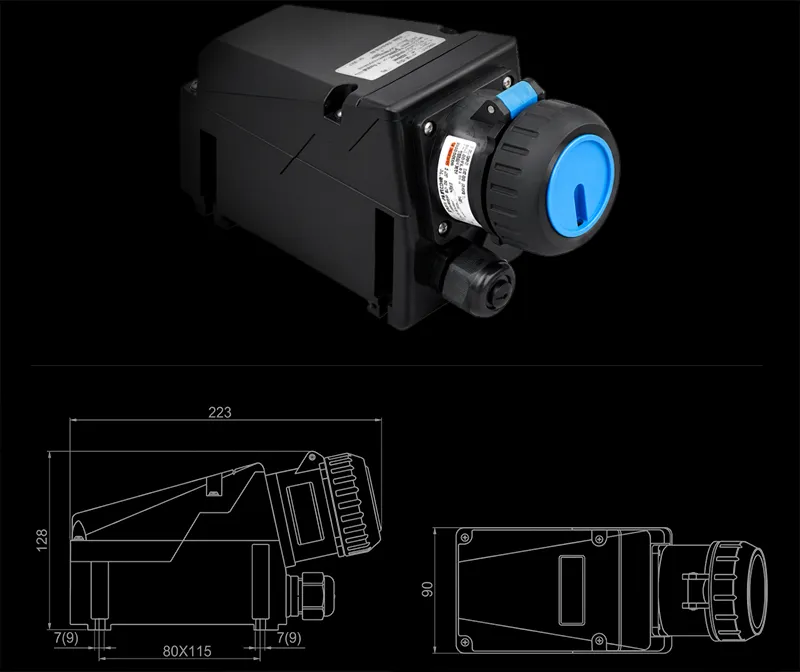
POLES | AC/DC PART NO. | AC/DC VOLTAGE | DATA SHEET |
|---|---|---|---|
2P | HSP1P 16 AC25 2P W-SCT HSP1P 16 DC25 2P W-SCT HSP1P 16 AC50 2P W-SCT HSP1P 16 DC50 2P W-SCT | 🟣 20~25V AC 🟣 20~25V DC ⚪ 36~50V AC ⚪ 36~50V DC | Download |
3P (2P + PE) | HSP1P 16 AC25 3P W-SCT HSP1P 16 DC25 3P W-SCT HSP1P 16 AC50 3P W-SCT HSP1P 16 DC50 3P W-SCT HSP1P 16 AC130 3P W-SCT HSP1P 16 AC250 3P W-SCT HSP1P 16 DC250 3P W-SCT | 🟣 20~25V AC 🟣 20~25V DC ⚪ 36~50V AC ⚪ 36~50V DC 🟡 110~130V AC 🔵 200~250V AC 🔵 50~250V DC | Download |
3P (1P + N + PE) | HSP1P 16 AC25 3P W-SCT HSP1P 16 AC50 3P W-SCT HSP1P 16 AC130 3P W-SCT | 🟣 20~25V AC ⚪ 36~50V AC 🟡 110~130V AC | Download |
4P (3P + PE) | HSP1P 16 AC250 4P W-SCT HSP1P 16 AC415 4P W-SCT HSP1P 16 AC500 4P W-SCT HSP1P 16 AC690 4P W-SCT | 🔵 200~250V AC 🔴 380~415V AC ◯ 480~500V AC ◯ 600~690V AC | Download |
5P (3P + N + PE) | HSP1P 16 AC250 5P W-SCT HSP1P 16 AC415 5P W-SCT HSP1P 16 AC500 5P W-SCT HSP1P 16 AC690 5P W-SCT | 🔵 200~250V AC 🔴 380~415V AC ◯ 480~500V AC ◯ 600~690V AC | Download |
AC/DC PART NO. | POLES | AC/DC VOLTAGE |
|---|---|---|
HSP1P 16 AC25 2P W-SCT / HSP1P 16 DC25 2P W-SCT HSP1P 16 AC50 2P W-SCT / HSP1P 16 DC50 2P W-SCT | 2P | 🟣 20~25V AC / 20~25V DC ⚪ 36~50V AC / 36~50V DC |
| PDFDownload | ||
HSP1P 16 AC25 3P W-SCT / HSP1P 16 DC25 3P W-SCT HSP1P 16 AC50 3P W-SCT / HSP1P 16 DC50 3P W-SCT HSP1P 16 AC130 3P W-SCT HSP1P 16 AC250 3P W-SCT / HSP1P 16 DC250 3P W-SCT | 3P (2P + PE) | 🟣 20~25V AC / 20~25V DC ⚪ 36~50V AC / 36~50V DC 🟡 110~130V AC 🔵 200~250V AC / 50~250V |
| PDFPobierz kartę katalogową | ||
HSP1P 16 AC25 3P W-SCT HSP1P 16 AC50 3P W-SCT HSP1P 16 AC130 3P W-SCT | 3P (1P + N + PE) | 🟣 20~25V AC ⚪ 36~50V AC 🟡 110~130V AC |
| PDFDownload | ||
HSP1P 16 AC250 4P W-SCT HSP1P 16 AC415 4P W-SCT HSP1P 16 AC500 4P W-SCT HSP1P 16 AC690 4P W-SCT | 4P (3P + PE) | 🔵 200~250V AC 🔴 380~415V AC ◯ 480~500V AC ◯ 600~690V AC |
| PDFDownload | ||
HSP1P 16 AC250 5P W-SCT HSP1P 16 AC415 5P W-SCT HSP1P 16 AC500 5P W-SCT HSP1P 16 AC690 5P W-SCT | 5P (3P + N + PE) | 🔵 200~250V AC 🔴 380~415V AC ◯ 480~500V AC ◯ 600~690V AC |
| PDFDownload | ||
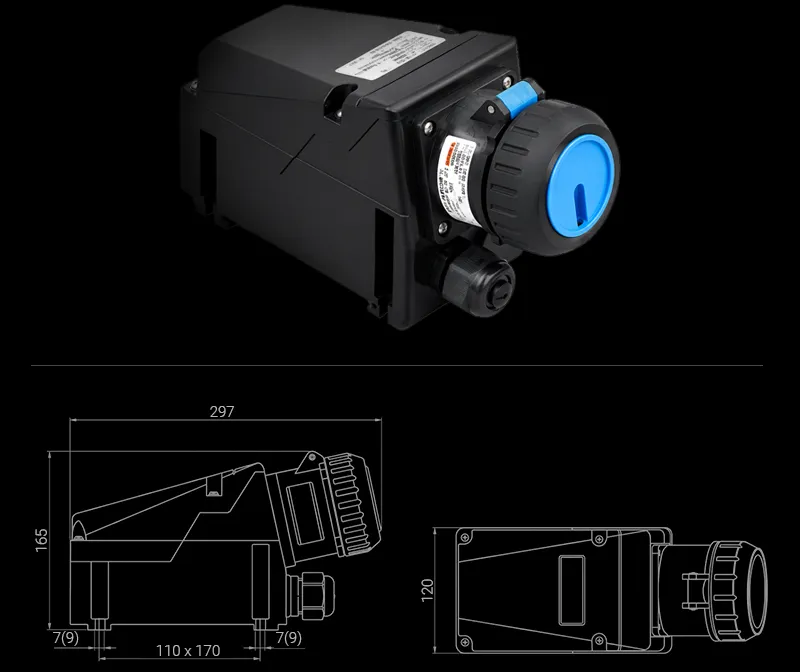
Ambient temperature: -45°C to +65°C | Degree of protection: IP66 | Cable entry: M25 cable gland + M25 blanking plug Integrated switch: ON / OFF switching by rotating the plug in the socket |
||
Ex-rated wall-mounted sockets for 32A current
POLES | AC/DC PART NO. | AC/DC VOLTAGE | DATA SHEET |
|---|---|---|---|
3P (2P + PE) | HSP1P 32 AC250 3P W-SCT HSP1P 32 AC415 3P W-SCT HSP1P 32 AC500 3P W-SCT | 🔵 200~250V AC 🔴 380~415V AC ◯ 480~500V AC | Download |
4P (3P + PE) | HSP1P 32 AC250 4P W-SCT HSP1P 32 AC415 4P W-SCT HSP1P 32 AC500 4P W-SCT HSP1P 32 AC690 4P W-SCT | 🔵 200~250V AC 🔴 380~415V AC ◯ 480~500V AC ◯ 600~690V AC | Download |
5P (3P + N + PE) | HSP1P 32 AC250 5P W-SCT HSP1P 32 AC415 5P W-SCT HSP1P 32 AC500 5P W-SCT HSP1P 32 AC690 5P W-SCT | 🔵 200~250V AC 🔴 380~415V AC ◯ 480~500V AC ◯ 600~690V AC | Download |
AC/DC PART NO. | POLES | AC/DC VOLTAGE |
|---|---|---|
HSP1P 32 AC250 3P W-SCT HSP1P 32 AC415 3P W-SCT HSP1P 32 AC500 3P W-SCT | 3P (2P + PE) | 🔵 200~250V AC 🔴 380~415V AC ◯ 480~500V AC |
| PDFDownload | ||
HSP1P 32 AC250 4P W-SCT HSP1P 32 AC415 4P W-SCT HSP1P 32 AC500 4P W-SCT HSP1P 32 AC690 4P W-SCT | 4P (3P + PE) | 🔵 200~250V AC 🔴 380~415V AC ◯ 480~500V AC ◯ 600~690V AC |
| PDFDownload | ||
HSP1P 32 AC250 5P W-SCT HSP1P 32 AC415 5P W-SCT HSP1P 32 AC500 5P W-SCT HSP1P 32 AC690 5P W-SCT | 5P (3P + N + PE) | 🔵 200~250V AC 🔴 380~415V AC ◯ 480~500V AC ◯ 600~690V AC |
| PDFDownload | ||
Ambient temperature: -45°C to +65°C | Degree of protection: IP66 | Cable entry: M25 cable gland + M25 blanking plug Integrated switch: ON / OFF switching by rotating the plug in the socket |
||
Ex-rated wall-mounted sockets for 63A current

POLES | AC/DC PART NO. | AC/DC VOLTAGE | DATA SHEET |
|---|---|---|---|
4P (3P + PE) | HSP1P 63 AC250 4P W-SCT HSP1P 63 AC415 4P W-SCT HSP1P 63 AC500 4P W-SCT HSP1P 63 AC690 4P W-SCT | 🔵 200~250V AC 🔴 380~415V AC ◯ 480~500V AC ◯ 600~690V AC | Download |
5P (3P + N + PE) | HSP1P 63 AC250 5P W-SCT HSP1P 63 AC415 5P W-SCT HSP1P 63 AC500 5P W-SCT HSP1P 63 AC690 5P W-SCT | 🔵 200~250V AC 🔴 380~415V AC ◯ 480~500V AC ◯ 600~690V AC | Download |
AC/DC PART NO. | POLES | AC/DC VOLTAGE |
|---|---|---|
HSP1P 125 AC250 4P W-SCT HSP1P 125 AC415 4P W-SCT HSP1P 125 AC500 4P W-SCT HSP1P 125 AC690 4P W-SCT | 4P (3P + PE) | 🔵 200~250V AC 🔴 380~415V AC ◯ 480~500V AC ◯ 600~690V AC |
| PDFDownload | ||
HSP1P 125 AC250 5P W-SCT HSP1P 125 AC415 5P W-SCT HSP1P 125 AC500 5P W-SCT HSP1P 125 AC690 5P W-SCT | 5P (3P + N + PE) | 🔵 200~250V AC 🔴 380~415V AC ◯ 480~500V AC ◯ 600~690V AC |
| PDFDownload | ||
Ambient temperature: -45°C to +65°C | Degree of protection: IP66 | Cable entry: M25 cable gland + M25 blanking plug Integrated switch: ON / OFF switching by rotating the plug in the socket |
||
Ex-rated wall-mounted sockets for 125A current

POLES | AC/DC PART NO. | AC/DC VOLTAGE | DATA SHEET |
|---|---|---|---|
4P (3P + PE) | HSP1P 125 AC250 4P W-SCT HSP1P 125 AC415 4P W-SCT HSP1P 125 AC500 4P W-SCT HSP1P 125 AC690 4P W-SCT | 🔵 200~250V AC 🔴 380~415V AC ◯ 480~500V AC ◯ 600~690V AC | Download |
4P (3P + PE + NO) | HSP1P 125 AC250 4P W-SCT HSP1P 125 AC415 4P W-SCT HSP1P 125 AC500 4P W-SCT HSP1P 125 AC690 4P W-SCT | 🔵 200~250V AC 🔴 380~415V AC ◯ 480~500V AC ◯ 600~690V AC | Download |
5P (3P + N + PE) | HSP1P 125 AC250 5P W-SCT HSP1P 125 AC415 5P W-SCT HSP1P 125 AC500 5P W-SCT HSP1P 125 AC690 5P W-SCT | 🔵 200~250V AC 🔴 380~415V AC ◯ 480~500V AC ◯ 600~690V AC | Download |
5P (3P + N + PE + NO) | HSP1P 125 AC250 5P W-SCT HSP1P 125 AC415 5P W-SCT HSP1P 125 AC500 5P W-SCT HSP1P 125 AC690 5P W-SCT | 🔵 200~250V AC 🔴 380~415V AC ◯ 480~500V AC ◯ 600~690V AC | Download |
AC/DC PART NO. | POLES | AC/DC VOLTAGE |
|---|---|---|
HSP1P 125 AC250 4P W-SCT HSP1P 125 AC415 4P W-SCT HSP1P 125 AC500 4P W-SCT HSP1P 125 AC690 4P W-SCT | 4P (3P + PE) | 🔵 200~250V AC 🔴 380~415V AC ◯ 480~500V AC ◯ 600~690V AC |
| PDFDownload | ||
HSP1P 125 AC250 4P W-SCT HSP1P 125 AC415 4P W-SCT HSP1P 125 AC500 4P W-SCT HSP1P 125 AC690 4P W-SCT | 4P (3P + PE + NO) | 🔵 200~250V AC 🔴 380~415V AC ◯ 480~500V AC ◯ 600~690V AC |
| PDFDownload | ||
HSP1P 125 AC250 5P W-SCT HSP1P 125 AC415 5P W-SCT HSP1P 125 AC500 5P W-SCT HSP1P 125 AC690 5P W-SCT | 5P (3P + N + PE) | 🔵 200~250V AC 🔴 380~415V AC ◯ 480~500V AC ◯ 600~690V AC |
| PDFDownload | ||
HSP1P 125 AC250 5P W-SCT HSP1P 125 AC415 5P W-SCT HSP1P 125 AC500 5P W-SCT HSP1P 125 AC690 5P W-SCT | 5P (3P + N + PE + NO) | 🔵 200~250V AC 🔴 380~415V AC ◯ 480~500V AC ◯ 600~690V AC |
| PDFDownload | ||
Ambient temperature: -45°C to +65°C | Degree of protection: IP66 | Cable entry: M25 cable gland + M25 blanking plug Integrated switch: ON / OFF switching by rotating the plug in the socket |
||
High resistance to
and chemicals
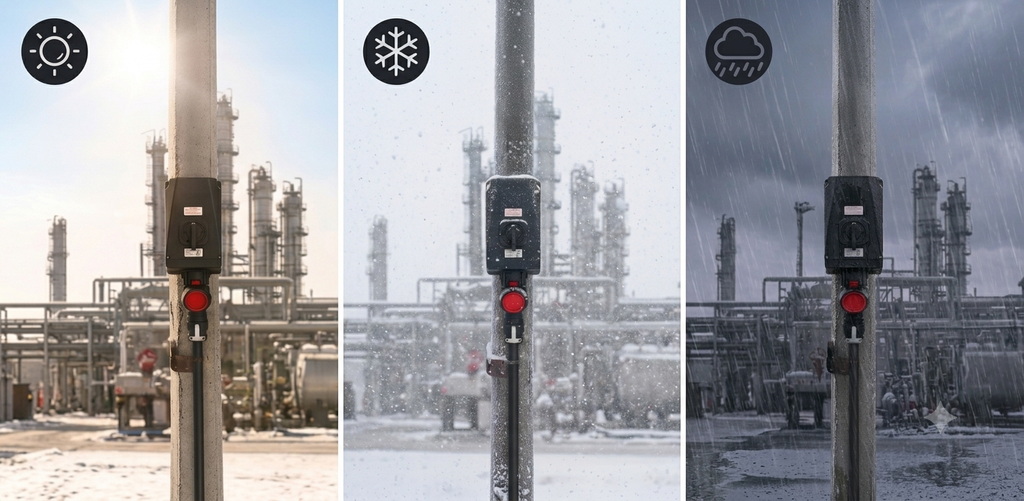
The glass-fibre-reinforced polyester (GRP) used in the manufacture of the HCS1P sockets was selected to ensure maximum protection against corrosive agents and UV radiation.
Ex HSP1P ******W-SCT explosion-proof wall sockets
The **HSP1P ******W-SCT wall sockets are designed to provide a safe power supply to electrical equipment in areas at risk of gas and dust explosions. They can be used in Zones 1, 2, 21 and 22, including in demanding industrial environments where moisture, dust, low temperatures or corrosive substances are present.
The operating procedure depends on the rated current:
- In the 16 A and 32 A versions, the circuit is switched on by turning the plug in the socket,
- In the 63 A and 125 A versions, the circuit is switched on using a rotary knob located on the socket cover.
In both solutions, the plug is mechanically locked in place during operation. It can only be removed once the socket has been switched off.
Ex-rated explosion-proof sockets with a mechanical lock
The customer’s problem
Accidentally removing the plug from the socket whilst electricity is flowing may cause an electric arc. In an atmosphere containing flammable gases, vapours or dust, the arc may act as a source of ignition.
Solution
HSP1P******W-SCT sockets are fitted with a mechanical lock that prevents the plug from being removed whilst the circuit remains live.
For the 16 A and 32 A versions:
- the plug is inserted into the socket,
- Turning the plug triggers the internal switch,
- the plug remains locked in the operating position,
- It can only be removed once it has been turned to the ‘off’ position.
For the 63 A and 125 A variants:
- the plug is inserted into the socket,
- the power is switched on using a knob on the housing,
- the mechanism prevents the plug from being removed,
- The plug is only released once the knob has been turned to the ‘off’ position.
Benefits for the user
- reducing the risk of disconnection under load,
- protection against the formation of a dangerous electric arc,
- ensuring the correct sequence of operations,
- a lower risk of damage to the contacts,
- greater operator safety.
Ex-rated industrial sockets with built-in circuit breaker
The customer’s problem
In standard sockets, the plug may be connected to the contacts whilst the circuit is live. The operator cannot always be certain whether current is flowing through the contacts at the moment the plug is inserted or removed.
Solution
The **HSP1P ******W-SCT sockets feature a built-in circuit breaker linked to the locking mechanism.
In the 16 A and 32 A versions, the switch is operated by turning the plug. Simply inserting the plug does not switch on the circuit. In the 63 A and 125 A versions, switching on and off is carried out using a separate knob on the socket cover. In both cases, the position of the control element determines the state of the socket and whether the plug can be removed.
Benefits for the user
- controlled power-up,
- no need to use a separate switch directly next to the socket,
- intuitive operation,
- limiting the number of live-line operations.
The built-in socket circuit breaker is not a substitute for installation safety measures. The circuit should be fitted with appropriately selected short-circuit and overload protection.
Ex sockets with protection against the plug being removed whilst under load
The customer’s problem
The operator may attempt to disconnect the device without first switching off the power supply. This leads to faster wear of the contacts, arcing and an increased risk of ignition of an explosive atmosphere.
Solution
The design of the HSP1P W-SCT sockets means that the ability to remove the plug is mechanically dependent on the position of the switch.
The plug may only be disconnected once the circuit has been switched off:
- by turning the plug to the ‘off’ position on the 16 A and 32 A versions,
- by turning the knob to the ‘off’ position on the 63 A and 125 A models.
Benefits for the user
Safety does not depend solely on the operator behaving correctly. The design of the machine physically prevents dangerous operations from being carried out.
How can electrical equipment be safely connected in an Ex zone?
Before connecting the device, check that the socket and plug are compatible in terms of:
- rated current,
- voltages,
- the number and arrangement of contacts,
- markings indicating explosion-proof design,
- temperature conditions,
- the diameter and cross-section of the cable.
16 A and 32 A versions
- Make sure the socket is switched off.
- Insert the correct plug.
- Block the call.
- Turn the plug to the ‘on’ position.
- When you have finished using the appliance, turn the plug to the ‘off’ position.
- Release the lock and remove the plug.
- Close the protective cover on the socket.
16 A and 32 A versions
- Make sure the knob is in the ‘off’ position.
- Insert the correct plug.
- Block the call.
- Turn the knob on the housing to the ‘on’ position.
- When you have finished working, turn the knob to the ‘off’ position.
- Release the lock and remove the plug.
- Close the protective cover.
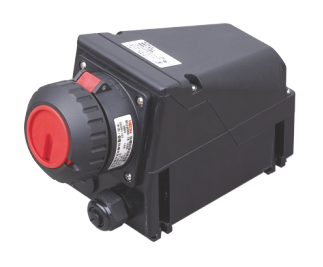
ATEX sockets for portable and service equipment
The customer’s problem
Portable devices are connected and disconnected repeatedly. This increases the risk of operator error, wear and tear on the contacts, and the cable becoming disconnected during operation.
Solution
HSP1P W-SCT sockets enable the safe power supply of compatible portable devices in Ex zones.
Mechanical lock:
- stabilises the connection,
- prevents the plug from being pulled out accidentally,
- forces the circuit to be switched off before disconnection,
- reduces the risk of an electric arc forming.
The self-cleaning design of the contact sleeves helps to remove some of the deposits from the contact surfaces whilst the connection is being made.
The solution can be used, amongst other things, to power:
- portable pumps,
- fans,
- measuring instruments,
- renovation equipment,
- Ex-rated units and process equipment,
- mobile service vehicles.
Benefits for the user
Safety does not depend solely on the operator behaving correctly. The design of the machine physically prevents dangerous operations from being carried out.
Protection against the accidental use of the wrong plug
The customer’s problem
A single installation may contain sockets with different voltages, rated currents and intended uses. Connecting a device incorrectly may result in damage to the appliance or pose a hazard.
Solution
The HSP1P W-SCT system employs several levels of security.
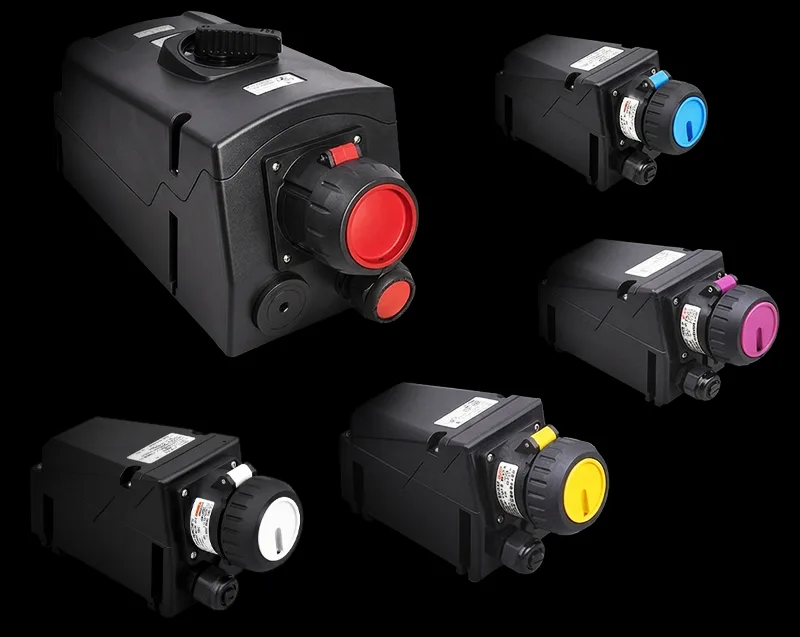
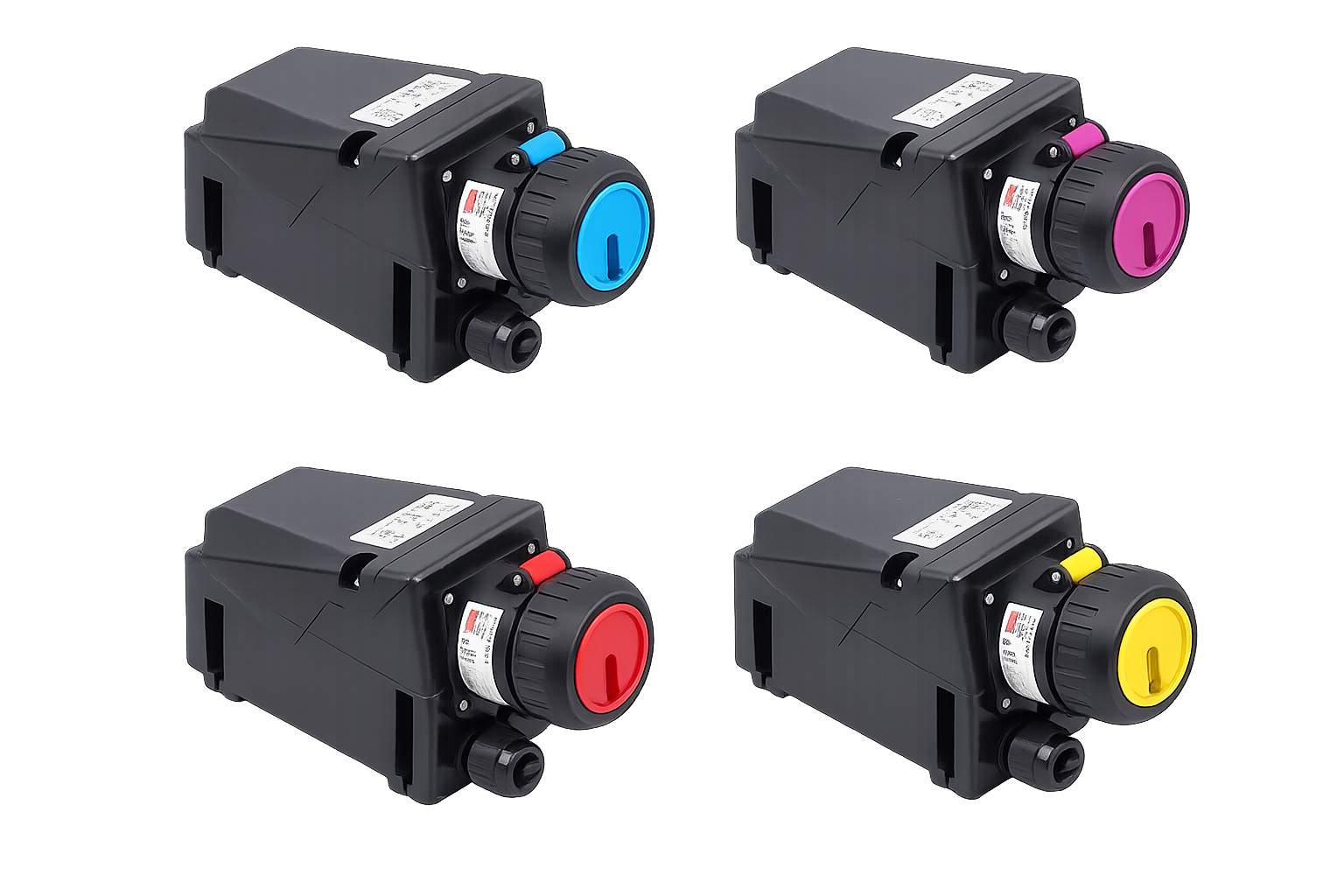
Colour-coding for voltage
The colour of the socket and plug components helps you to quickly identify the voltage range. This reduces the risk of connecting the appliance to a circuit with incorrect specifications.
The colour is for guidance only. Always check the rating before making a connection.
Protection against the connection of components with different current ratings.
The mechanical design of sockets and plugs with different rated currents prevents them from being connected accidentally. A plug designed for a different current rating will not fit into the socket.
Protection against the connection of a standard non-Ex plug
The design of the socket prevents the connection of a standard non-Ex industrial plug. This reduces the risk of accidentally using equipment that is not intended for use in a potentially explosive atmosphere.
Benefits for the user
- a lower risk of voltage errors,
- it is not possible to connect components with incompatible currents,
- a safeguard against the use of a standard industrial plug,
- easier identification of circuits by operators
How do you choose an explosion-proof socket to match a plug?
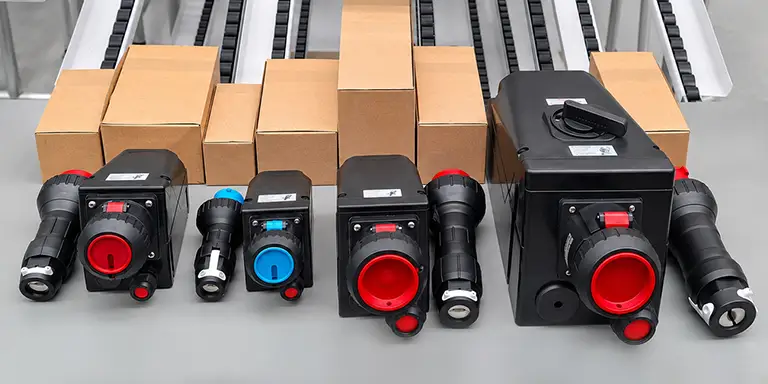
The selection process should begin by determining the specifications of the device to be powered.
1. Rated current
The rated current of the socket and plug must correspond to the specifications of the circuit and the load. Typical ratings include 16 A, 32 A, 63 A and 125 A.
2. Voltage
You should check the device’s rated voltage and the colour-coding of the system. The colour alone is no substitute for checking the rating plate.
3. Number and arrangement of contacts
It should be determined whether the installation requires:
- two contacts,
- two terminals and the PE,
- phase, neutral and PE conductors,
- three-phase and PE,
- three phases, the neutral conductor and the PE conductor,
- • an additional NO auxiliary contact.
4. Type of Ex zone
The device’s marking must correspond to the classification of the installation site, the gas or dust group, and the required temperature class.
5. Ambient temperature
The maximum permissible temperature depends on the specific variant, the current, the cable cross-section and the temperature class.
6. Cable
The following should be taken into account
- core cross-section,
- the outer diameter of the cable,
- the number of cores
- temperature resistance of the insulation,
- type of gland
- the need to use reinforced or non-reinforced cable
7. How to use
The following design difference should be taken into account:
- 16 A and 32 A – activated by turning the plug,
- 63 A and 125 A – operated by a rotary switch on the housing.
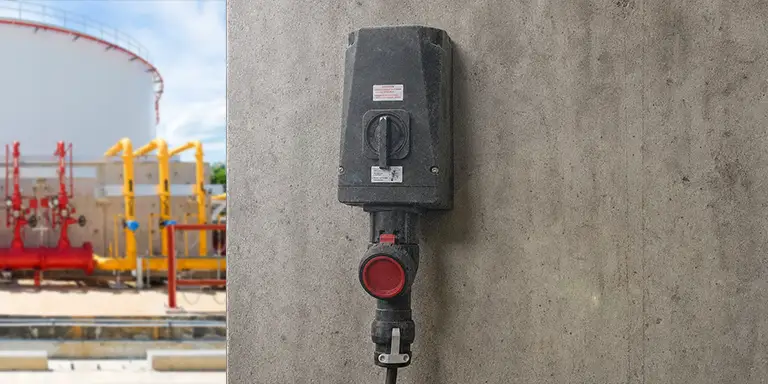
IP66 explosion-proof sockets for outdoor use
IP66 explosion-proof sockets for outdoor use
The customer’s problem
Equipment installed outdoors is exposed to rain, snow, dust, damp, condensation and fluctuating temperatures.
Solution
HSP1P W-SCT sockets offer an IP66 protection rating. The housing and sealing components protect the interior from dust and powerful jets of water.
Silicone seals are resistant to
- low temperatures,
- a high temperature,
- ageing,
- changing weather conditions.
Once the plug has been removed, the socket must be covered with a protective cap. The degree of protection of the entire installation also depends on the correct selection and fitting of cable glands and blanking plugs.
Benefits for the user
- suitable for outdoor installation,
- protection against dust and water,
- minimising the impact of weather conditions on electrical connections,
- a lower risk of moisture getting inside.
IP66 does not mean that the device is intended for permanent submersion or that water may be directed into an open socket.
Self-cleaning contact sleeves
The customer’s problem
Dust, deposits and contaminants on the contacts can increase the resistance of the connection, cause overheating and compromise the reliability of the power supply.
Solution
The contact sleeves used in **HSP1P ******W-SCT sockets feature sliding elements. When mated with a plug, the contact surfaces are mechanically cleaned.
Benefits for the user
- a more stable electrical connection,
- reducing the build-up of deposits,
- a lower risk of developing resistance,
- greater reliability with repeated connections.
The self-cleaning function is no substitute for regular inspections and maintenance.
Two cable entry points to make installation easier
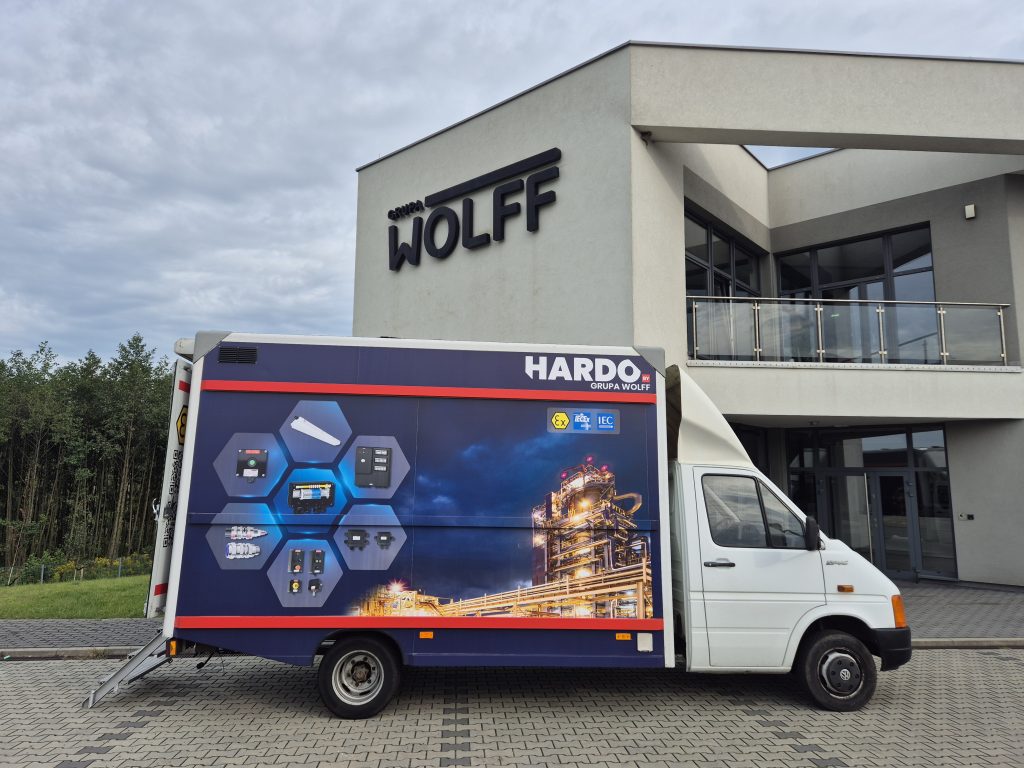
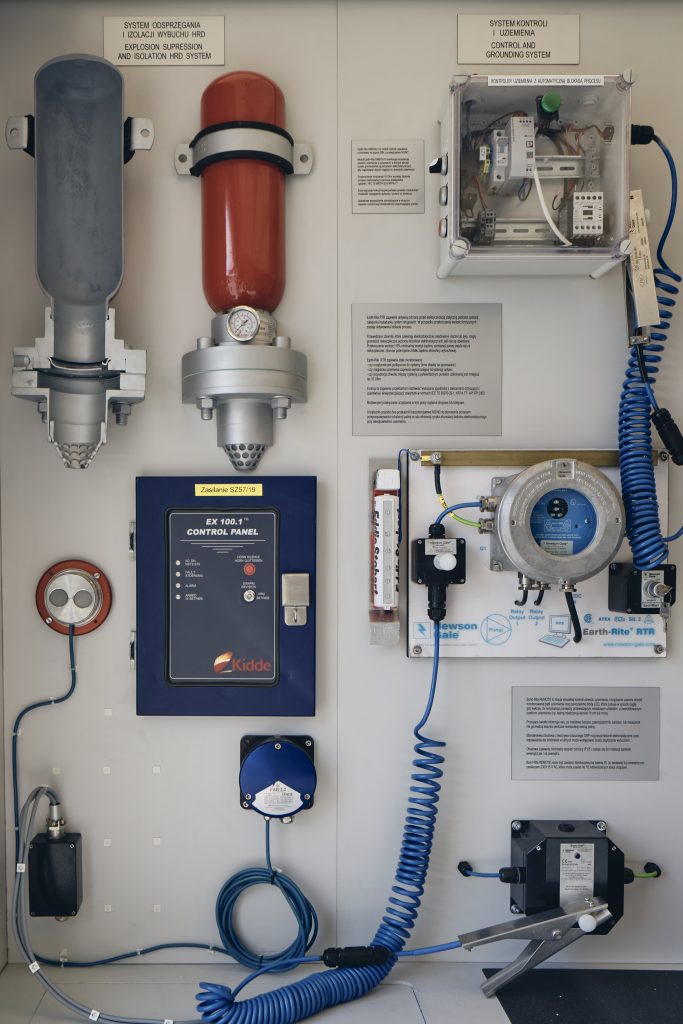
Mobile demonstration centre
Are you facing a project in the Ex sector? Do you feel that your knowledge isn’t quite up to scratch? Are you looking for a long-term supplier or considering changing your current one?
Any one of these reasons is enough to book a visit from our mobile demonstration centre.
Why do our customers book a visit from the mobile demo centre?
They want to compare the quality and functionality of HARDO’s solutions and those of other manufacturers directly at their own site
They need to train the team in the installation and selection of Ex equipment
They are working on standardising equipment within their company and are looking for the best options
They want to speed up the purchasing process by viewing and testing the equipment in person
They want to assess not only the technical specifications, but also the ergonomics and ease of use of the products
They value direct contact and the opportunity to talk to engineers
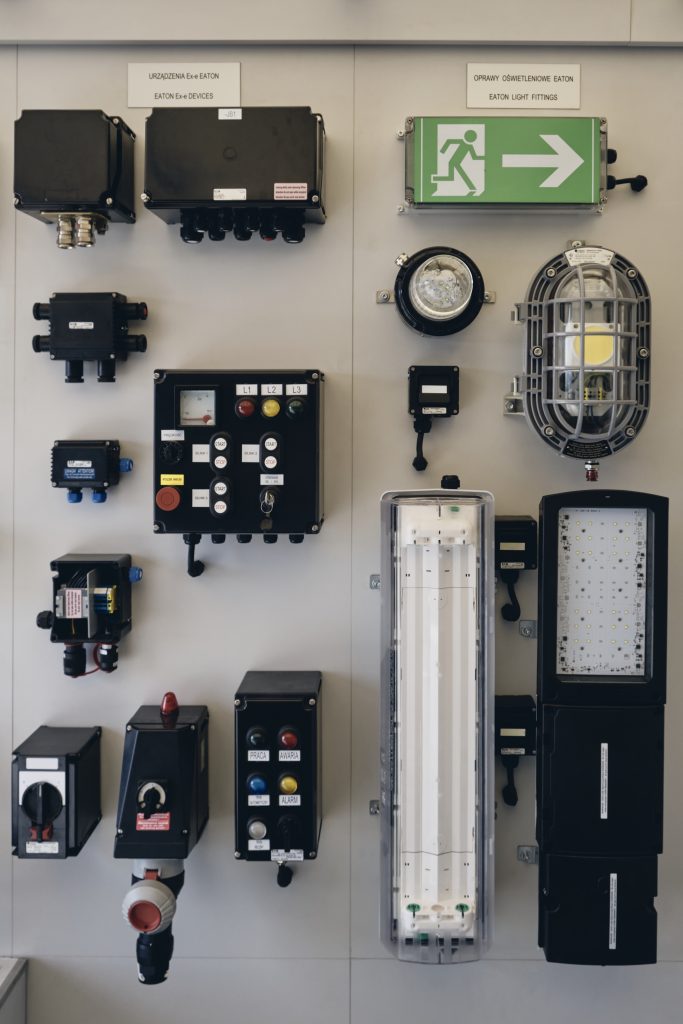
See for yourself!
See what our products look like in real life and choose the ones you need

Which sectors do we support?
We’re here to provide the best solutions for industry. Find out how we can help your business!