Risks in the chemical industry and how to eliminate them in accordance with ATEX


The chemical industry, a vital economic sector, faces numerous risks associated with processing hazardous materials. These substances, which number in the hundreds, form the basis for tens of thousands of products. Each production stage, from raw materials to final products, requires meticulous safety measures to mitigate inherent dangers.
Common hazardous substances in chemical processing
The majority of substances handled in the chemical industry are flammable, explosive, or toxic. Many emit harmful gases during production, adding to their risk profile. Key examples include:
- Ammonia: Widely used in fertilizers and cooling systems, ammonia is highly flammable and explosive.
- Nitrogen and phosphorus: Core ingredients in fertilizers, these elements are stable alone but can react dangerously with other substances.
- Solvents (e.g., acetone, toluene): Used in paint production, these flammable chemicals can form explosive mixtures in air.
- Hydrogen sulfide: A by-product of oil refining and natural gas processing, this flammable gas poses significant hazards.
- Chlorine: Highly reactive, chlorine can cause violent chemical reactions with organic substances, potentially sparking fires.
- Natural gas and oil: Used in plastics and synthetic fibers, these substances are highly flammable, with spills posing explosion and fire risks.
- Nitroglycerin: A primary component in explosives, nitroglycerin is extremely unstable and demands strict safety protocols.
- Biomass and compost: Dried biomass is highly flammable, while compost can self-ignite when exposed to moisture.
The above list, although short, already makes it clear that there is a high risk of explosion and fire in chemical processing plants. This is due to the fact that the substances used can lead to the formation of explosive atmospheres. Also relevant is the fact that these can be both gaseous and dust explosive atmospheres.
What does the ATEX Directive require of employers?
For facilities processing flammable dusts, gases, or hazardous vapors, the ATEX Directive imposes strict safety obligations on employers. These regulations require:
- Prevention of Explosive Atmospheres: Employers must take steps to eliminate the formation of explosive atmospheres in the facility.
- Elimination of Ignition Sources: All potential ignition sources must be removed to prevent the accidental ignition of any explosive atmospheres.
- Mitigation of Explosion Effects: In cases where explosion risks cannot be entirely eliminated, employers must implement measures to limit the impact.
Managing explosive atmospheres
Chemical industry operations use multiple strategies to reduce the likelihood of explosive atmospheres. These include equipment sealing, ventilation, and process inerting. Yet, given that production processes (like chemical reactions, heating, and cooling) naturally emit flammable materials, completely avoiding explosive atmospheres is often impractical. Equipment design, therefore, must prioritize spill prevention and safe chemical transfer, with each apparatus engineered to reduce the possibility of explosive substance release.
Elimination of ignition sources in chemical production
Electrical short circuits are a leading cause of fires in many settings, including industrial environments. In chemical processing facilities, where hundreds of flammable substances are present, even a small spark could ignite an explosive atmosphere. Consequently, high-risk operations require that all equipment—not only machinery but also junction boxes, control units, switchgear, and cable glands—be certified for use in Ex zones to meet ATEX standards.
Electrical equipment for hazardous areas in the chemical industry
The demands of the chemical industry necessitate explosion-proof electrical equipment that can withstand corrosive environments, high pressures, extreme temperatures, and reactive or explosive gases. Stainless steel is often recommended for this purpose due to its durability. HARDO’s product line offers a wide selection of stainless steel equipment certified under ATEX and IECEx, specifically engineered for longevity, reliability, and low maintenance in Ex zones.


What makes HARDO stand out?
- ATEX, IECEx certifications,
- intended for use in 1, 2, 21, 22 and non-hazardous areas,
- resistant to high temperatures,
- high corrosion resistance,
- designed to be robust, durable and reliable for years to come,
- Robust and durable construction for a long service life,
- low maintenance costs.
Lighting for hazardous areas
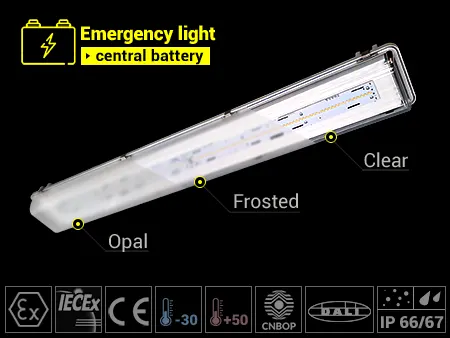
Lighting is essential in production environments, including hazardous zones. Equipment designed for Ex zones ensures that luminaires do not contribute to ignition risks via heated surfaces, electrical shorts, or sparks. It is vital that all lighting equipment used in these areas is certified for safety and compatibility with explosive atmospheres.

Additional measures for ignition prevention and explosion impact reduction
The EN 1127-1 standard identifies 13 ignition sources, with static electricity being especially significant for the chemical industry. Handling tasks like pouring, mixing, and transferring materials often generate static, which can ignite an explosive atmosphere upon discharge. To address this, ATEX-compliant grounding systems are mandatory wherever static discharge risks are present.
In alignment with the third point of the ATEX Directive, reducing explosion impacts is essential. Any equipment where explosions could potentially occur must incorporate explosion suppression or venting systems, as well as explosion isolation measures.
For support in electrostatic earthing and explosion protection, feel welcome to consult GRUPA WOLFF , your trusted resource for both products and expertise in these safety-critical areas.